Boxing and kickboxing are intense sports. You work at a high pace in short rounds and go again after brief rests. Turning up to that kind of session on an empty stomach, or straight after a heavy meal, will hurt your performance. Eating the right things at the right time keeps your energy up during training and means you feel less tired the next day.
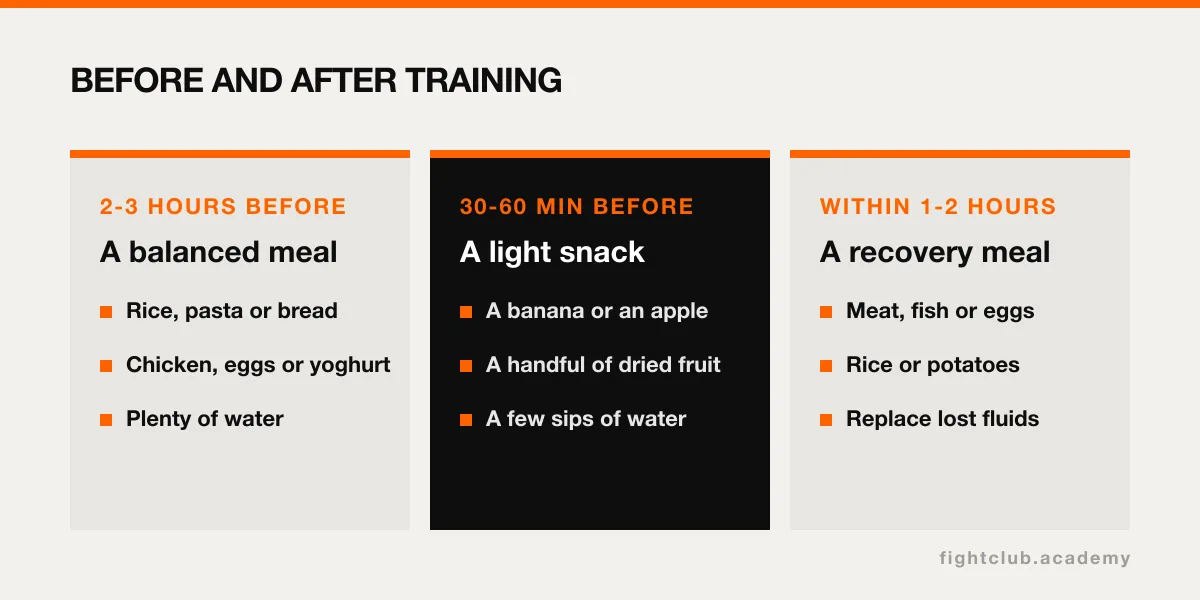
2-3 hours before training
A balanced meal two to three hours before training is ideal. Your plate should have a carbohydrate source for energy (rice, pasta, wholemeal bread or potatoes) and a protein source (chicken, eggs, yoghurt or pulses). Very fatty, heavy meals slow down digestion and leave your stomach feeling heavy during training, so they're better saved for afterwards.
30-60 minutes before training
If it's been a long time since lunch, or you're coming straight from work, a light snack will do the job. A banana, an apple or a handful of dried fruit gives you quick energy without weighing on your stomach. Drinking a lot of water at this point can backfire too; drinking regularly through the day is better than gulping down water just before you start.
During training
For an hour-long session, water is usually enough. A few sips between rounds helps replace the fluid you lose through sweat. If you sweat a lot or you're training on a hot day, remember to drink a bit more afterwards.
After training
A meal with protein and carbohydrates within an hour or two of training helps your muscles recover and replaces the energy you've used. Simple combinations work fine: grilled chicken and rice, eggs on wholemeal toast, or yoghurt with fruit. If you can't eat a proper meal straight away, a bowl of yoghurt or a glass of milk is a good stopgap.
If you train in the morning
If you train early in the morning, eating two or three hours beforehand often isn't realistic. In that case, something light and quick to digest when you wake up, such as a banana or a slice of bread with a little honey, is much better than training on an empty stomach. You can save your main breakfast for afterwards; eggs, cheese, wholemeal bread and fruit make a good recovery meal.
If you're trying to lose weight
Skipping the meal after training can seem tempting when you're trying to lose weight, but it usually leaves you hungrier the next day and makes your training less effective. Watching your portions and cutting back on sugary drinks is a far more sustainable approach than skipping meals. Everything here is general guidance; if you have a specific health condition or goal, we recommend speaking to a dietitian.
All articles