
Hand wraps are one of the things beginners skip most often. People assume the gloves already protect them, but gloves only soften the impact. Wraps are what keep your wrist stable, hold your knuckles together and support the small bones inside your hand. In a session where you throw hundreds of punches at a heavy bag, you feel that difference very quickly.
What length should you buy?
For adults, wraps of around 4 to 4.5 metres are usually recommended. That's long enough to cover the wrist, the knuckles and the gaps between the fingers. For smaller hands or children, 2.5 to 3 metre wraps are more comfortable. Slightly elastic wraps fit the hand better and are easier for beginners to put on.
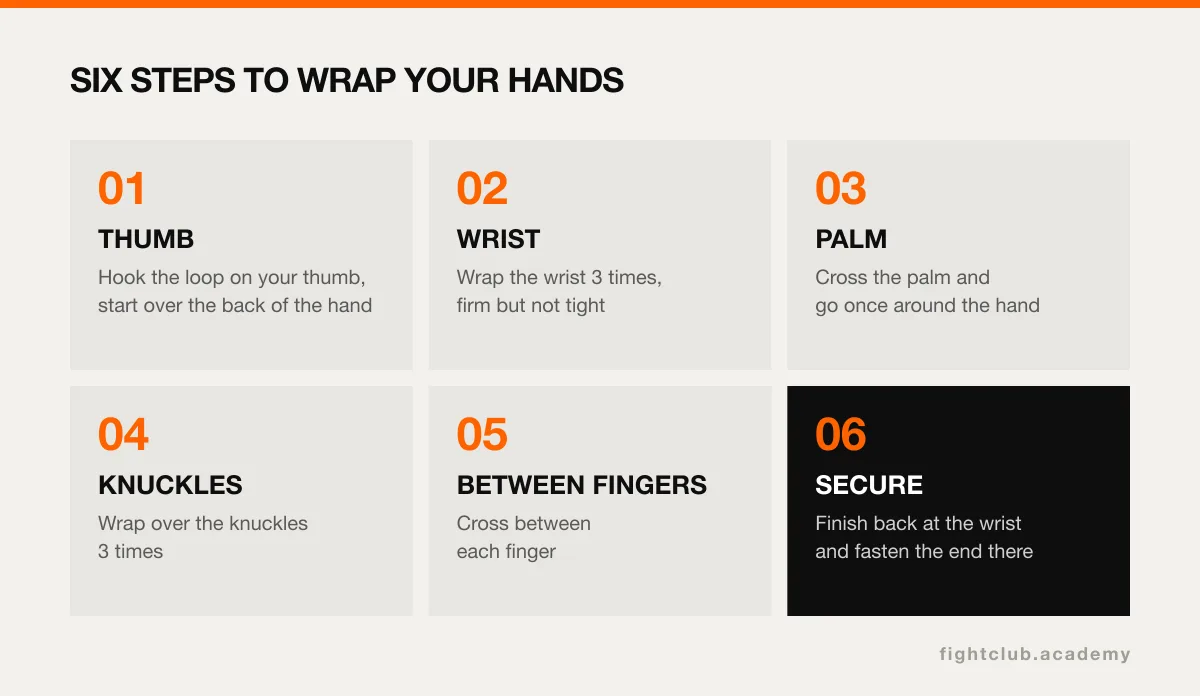
Step by step
Hook the loop at the end of the wrap over your thumb and bring the wrap towards your wrist, starting over the back of your hand. Wrap the wrist three times; it should feel supported but not so tight that it cuts off circulation. Then cross over the palm, go once around the hand and wrap three times over your knuckles. The knuckles take the impact, so that's where you want the most padding.
Next, starting between your little finger and ring finger, cross the wrap between each pair of fingers. These passes stop the knuckles spreading apart and keep the wrap from sliding. Bring what's left back to the wrist, go round once or twice more and fasten it with the Velcro. Once you're done, make a fist and open your hand; you should be able to move freely, and your fingertips shouldn't go numb.
Common mistakes
The most common mistake is wrapping too tightly. Your hands swell during training, and a wrap that felt fine at the start can really hurt half an hour later. The second is not wrapping the wrist enough, even though it's one of the joints under the most strain when you punch. The third is putting wraps in your bag without drying them. Damp wraps start to smell quickly, so wash them and let them air-dry after every session.
Wraps or inner gloves?
You'll also find inner gloves that replace wraps and take seconds to put on. They're certainly convenient, but they don't support the wrist and knuckles as well as wraps do. They can work for a quick warm-up or some light bag work; if you train regularly and hard, classic wraps are still the safest option. Wraps also protect the inside of your gloves from sweat, so your gloves last longer.
Wrapping can take a while the first few times, but within a few weeks it becomes a two-minute habit. If you're ever unsure, ask your coach to show you; properly wrapped hands mean healthy hands for years to come.
All articles